



Sleep
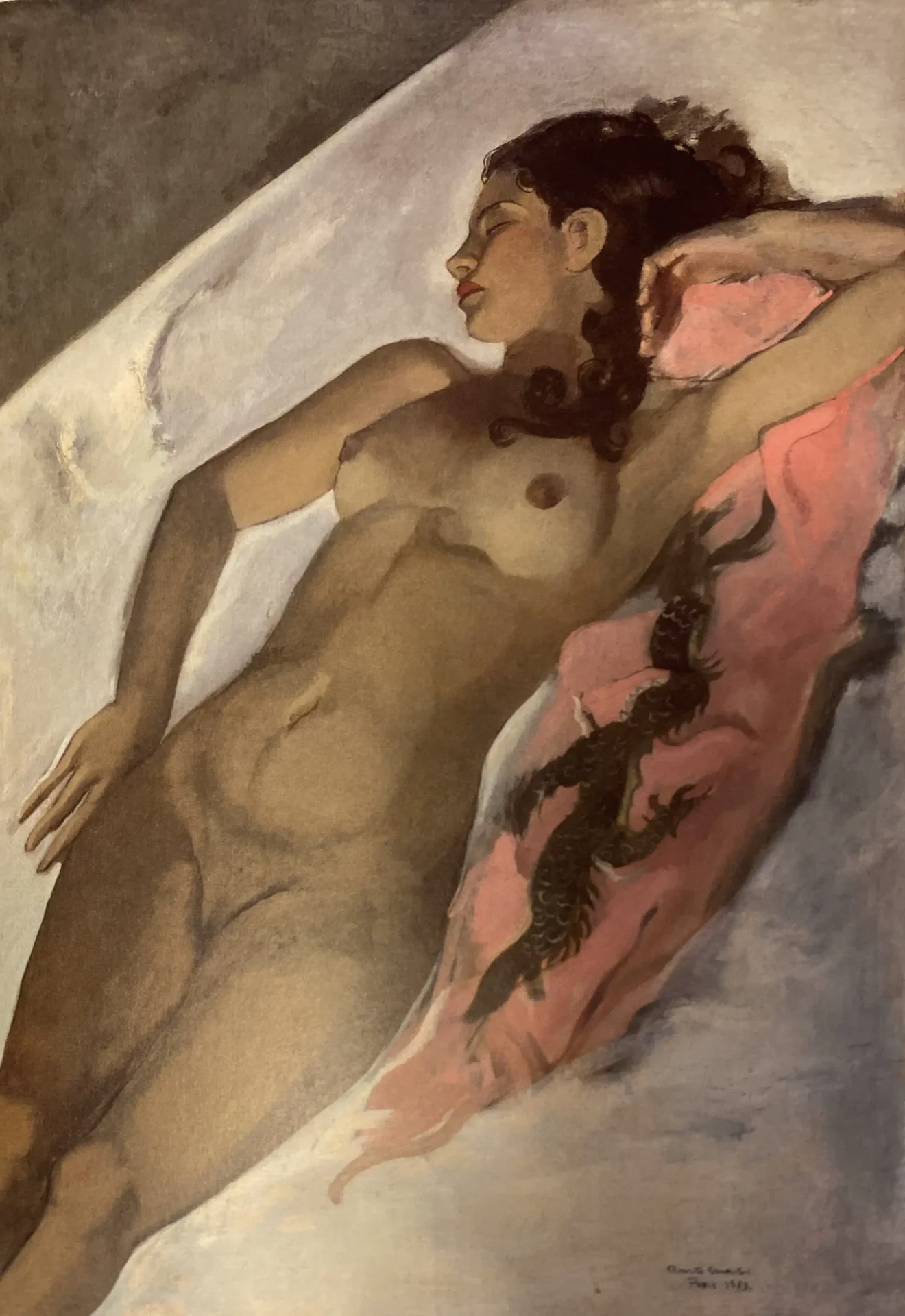
Created in 1933, Sleep by Amrita Sher-Gil is an evocative oil painting depicting her younger sister, Indira, in a calm and intimate pose on a white sheet. The strategic use of color and the dynamic composition draw attention to the natural beauty and relaxed form of the subject, while the shawl with a dragon motifs flows gracefully around her, suggesting a harmonious connection between the figures. Renowned for its artistic significance, the work showcases Sher-Gil's classical training and bold exploration of identity and representation. Despite being unsold for many years, it remains a vital part of Indian modern art and is currently housed at the National Gallery of Modern Art in New Delhi.
1932 - 1933
About the Artwork
Click on the image to enlarge
Did You Know

Liked what you see? Add it to your collection.
Enjoyed reading? Share it.
... continued
Artist and Subject
Sleep is an oil on canvas painting by Amrita Sher-Gil, depicting her younger sister, Indira, who is naked and lying on a white sheet at a diagonal angle. The painting is also known as "Indu's Nude" or "Nude of Indira".
Composition
The painting shows Indira with her left arm raised, and beneath her is a shawl featuring a dragon. The dragon's body parallels the flow of her hair and body curves, creating a harmonious composition. The view is from above, highlighting Sher-Gil's unique perspective and technique.
Creation and Exhibitions
Sher-Gil began working on Sleep in 1932 while she was in Paris, where she was also painting a view from the top of Notre-Dame de Paris. The painting was later exhibited at several venues, including the Public Gardens in Hyderabad in 1936, her solo exhibition at Faletti's Hotel in Lahore in 1937, and the Indian Academy of Fine Arts' Amritsar Exhibition in 1940. Despite attempts to sell it, the painting remained unsold and is now housed at the National Gallery of Modern Art in New Delhi. It was also part of an exhibition at the Tate Gallery in London in 2007.
Artistic Significance
Sleep is noted for its elegant and richly colored portrayal, reflecting Sher-Gil's classical training as well as her exploration of representing the non-Western body. The painting has been compared to Édouard Manet's "Olympia" by scholar Nikky-Guninder Kaur Singh, and it is described as having a "perfect composition" by Katalin Keserü, former director of the Ernst Museum.
Legacy
Amrita Sher-Gil, who died at the age of 28, is considered one of the most important woman painters of 20th-century India. Her works, including Sleep. continue to be celebrated for their unique blend of post-impressionism and the representation of Indian subjects.